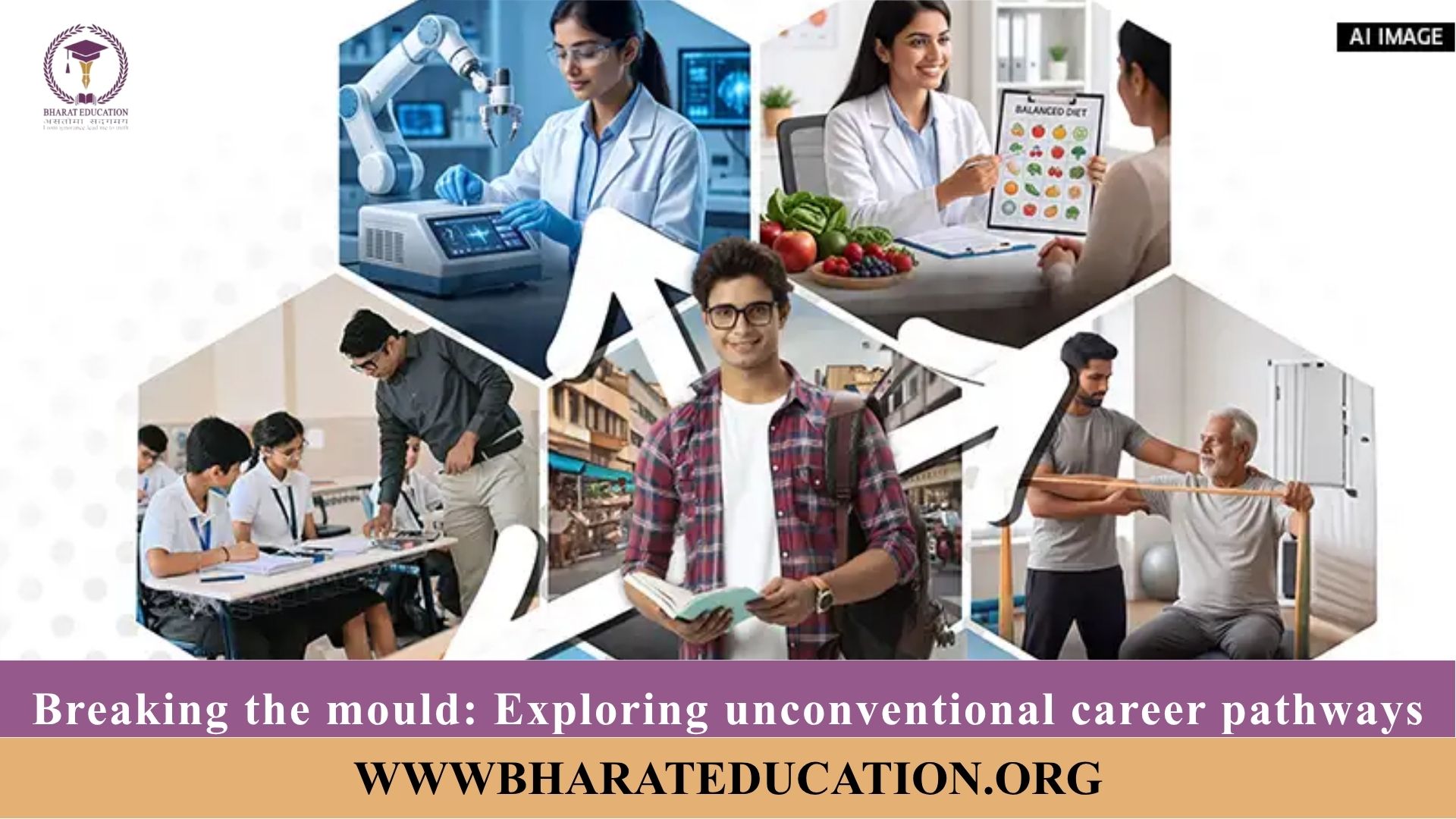


Spanning wellness and rehabilitation, ecology, and inclusive education, a new wave of academic programmes is gaining momentum as industries value specialised, human-centric skills that expand career horizons and strengthen the link between education and meaningful employment.
The educational landscape is shifting beyond conventional medical and engineering degrees as students are increasingly looking for skill-driven careers. From nutrition and dietetics to physiotherapy, sports science, life sciences, conservation, and special education, these emerging fields are no longer a fallback option, but purposeful career choices aligned with industry demand and societal needs. Education Times explores how these unconventional pathways are reshaping career choices and preparing a new generation of professionals for a rapidly changing world.
Once viewed as a fallback for students unable to secure seats in medicine or engineering, Life Sciences is steadily emerging as a viable and lucrative career path, driven by advances in health tech, bioinformatics, and AI-led biological research. With the integration of computational skills, data analytics, and business applications, Life Sciences is becoming more aligned with industry needs, opening diverse and competitive career opportunities. Students specialising in areas such as computational biology, synthetic biology, and interdisciplinary research are at the forefront of this shift.
Biopharma companies and CDMOs are among the largest recruiters, offering roles in quality assurance, quality control, and manufacturing. CROs continue to absorb significant talent in clinical research and pharmacovigilance, while biotech startups are seeking multi-skilled professionals. Despite this momentum, Life Sciences still struggles with perception challenges. As the world witnessed during pandemic, the importance of Life Sciences cannot be overstated. The current shift suggests that the field is finally gaining recognition.
— Prof Bismita Nayak, HoD, Life Sciences, NIT Rourkela
Nutrition and Dietetics is a hot choice driven by exploding demand. This is largely driven by the rising burden of lifestyle disorders such as diabetes, obesity, and cardiovascular diseases, which require long-term dietary management. India is witnessing a dual challenge of undernutrition and overnutrition, making qualified nutrition professionals indispensable. At the same time, there is a clear transition from curative to preventive healthcare, where food is viewed as a primary tool for disease prevention and health optimisation.
As awareness grows, so does demand for nutrition experts who are now needed across hospitals, wellness centres, corporate health programmes, and even digital health platforms. Graduates can work as clinical dietitians, public health nutritionists, and consultants, with expanding roles in sports nutrition, nutraceuticals, and corporate wellness. The academic pathway typically includes UG (BSc), PG (MSc), and PG diploma programmes in specialisations such as Clinical Nutrition, Public Health Nutrition, Food Nutrition, Nutrition and Dietetics, and Sports Nutrition. Despite growing opportunities, fresh graduates often encounter challenges, including skill gaps, low initial salaries, and limited specialisation. Many entry-level roles, particularly in clinical settings, may not fully reflect the years of academic investment, leading to early career dissatisfaction. To overcome these hurdles, HEIs must strengthen ties with healthcare and wellness sectors while integrating emerging fields like AI-driven diet planning, nutrigenomics, and entrepreneurship.
— VK Modi, Head of Institution, Amity Institute of Food Technology
As climate change intensifies, careers in conservation biology, forestry, and ecological restoration gain prominence. For Indian students, the path into these fields is fragmented. Unlike the US or Europe, where conservation biology is a well-defined discipline, India offers limited direct academic routes. Most varsities do not have dedicated departments for conservation science or wildlife biology. Instead, students must navigate through broader programmes such as Environmental Studies, Botany or Zoology. Students who enter can explore roles including urban foresters, silviculturists and environmental scientists. They are encouraged to collaborate with researchers, intern with biodiversity parks, forest departments or NGOs. Many researchers mentor students, allowing them to work on live conservation sites, including wetlands and forests, and urban biodiversity parks. Forestry remains one of the most established career routes. Entry into Indian Forest Service through the UPSC exam offers stable government careers.
— CR Babu, Professor Emeritus, DU
NEP 2020 and recent Supreme Court directives have amplified the demand for special educators. While tier-I and tier-II private schools and KVs are increasing permanent hires, the scope of a special educator is no longer confined to traditional schools. Aspirants typically begin with foundational courses like DElEd (for PRT roles) or a BEd in Special Education (for TGT roles). While these programmes offer specialisations in areas like Autism Spectrum Disorder or Visual Impairment, the core curriculum remains comprehensive. Certification from RCI is mandatory to practice legally and secure recognised jobs. Special educators are sought after in clinical setups, hospitals, and NGOs for community-based rehabilitation.
— Nupur Sharma, Special educator
The relevance of Physical Education and Sports Science has grown, but it is still mistaken as a sports career restricted for professional athletes. It is a field that merges health education, fitness science, and performance analysis. The academic journey begins with a Bachelor of Physical Education (BPEd), covering anatomy, sports psychology, and coaching. For those seeking higher administrative or academic roles, a Master of Physical Education (MPEd) is essential, while qualifying for UGC NET further enables graduates to work as academics of Physical Education in varsities. Graduates work as PE teachers, fitness trainers, and yoga instructors. Roles such as sports scientists, event coordinators for competitions like Commonwealth Games, are becoming increasingly relevant.
— Vinod Kumar, Chairperson, Sports Promotion Committee, NDMC-Navyug Schools
POSTED BY : EDUCATION TIMES
DATE : 14/4/2026